


Open Loom
Pedestrians walk past the huge dark windows of a bank building on Wall Street in 1915.

Loom does the reading.
You keep the judgement.

Loom reads what US public companies publish as it comes out. It tells you what changed, and it links every finding to the sentence it came from.

Loom is in public alpha. It does not charge for access, and it does not give investment advice.

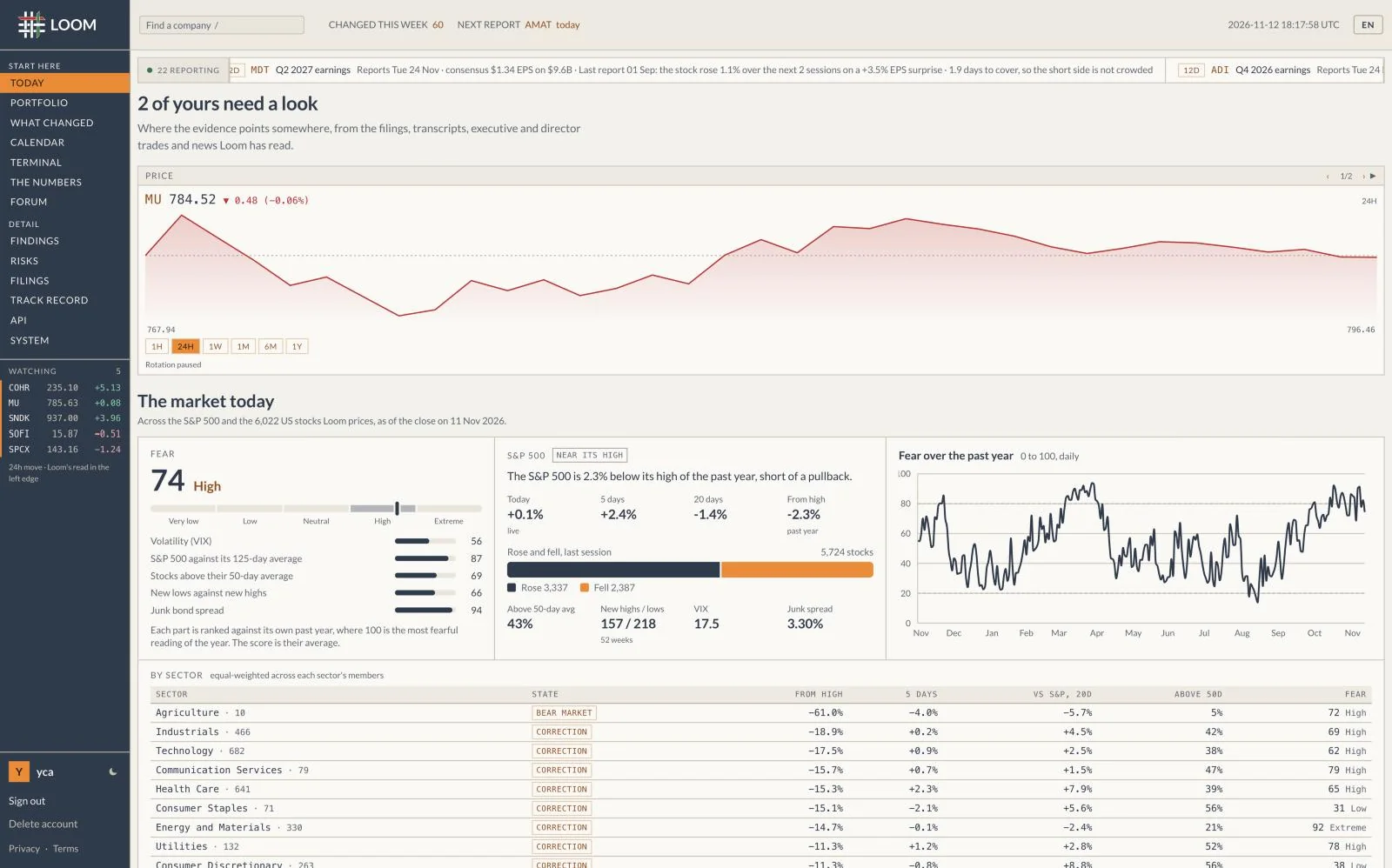
Loom's Today page, with the holdings that need a look, a price chart, the fear score in the market and the condition of each sector.

Every quarter, every company you own publishes a report, holds a call, reports its executives' share trades and makes the news. Nobody can read all of it in time to act on it. Loom reads it for you, and it shows you exactly where each conclusion came from.

Following one company properly takes seven steps.

An individual investor takes every one of them alone, for every company they own, every time something new is published.

Loom takes the first six, which are information processing, so the only step left for you is the one that needs your judgement.

  1. 1 Documents are gathered from many sources. You take this step until Loom takes it over.
  2. 2 Each filing is compared with the previous one. You take this step until Loom takes it over.
  3. 3 Figures are checked against history and peers. You take this step until Loom takes it over.
  4. 4 Links and contradictions between sources are found. You take this step until Loom takes it over.
  5. 5 The changes that matter are picked out. You take this step until Loom takes it over.
  6. 6 The meaning of each change is worked out. You take this step until Loom takes it over.
  7. 7 A view is formed and a decision is made. You take this step.

Every finding leads back to the sentence it came from.

The source sits on the left. Loom's finding sits on the right, with how Loom established it and whether the quote appears word for word.

Apple filed this passage in its annual report on Form 10-K on 3 November 2026.

The passage below is quoted exactly as it appears in the source.

… The Company is experiencing supply constraints and rising costs driven by industry-wide supply-demand imbalances for key components, including advanced semiconductors, memory and storage. The Company expects these trends to intensify for memory and storage components …
Open the original document ↗

Memory and storage shortages are critical for Apple's hardware (iPhones, Macs, iPads), and prolonged constraints could lead to production delays, higher costs, or forced price hikes that hurt demand.

  • Loom classed it as a new risk factor of major importance.
  • The document points negative, and direction always describes the document.
  • Loom found the quote word for word in the source.
  • Loom read it from one filing that had no predecessor on file, so it says the risk reflects this filing's own framing and has not been measured against an earlier report.

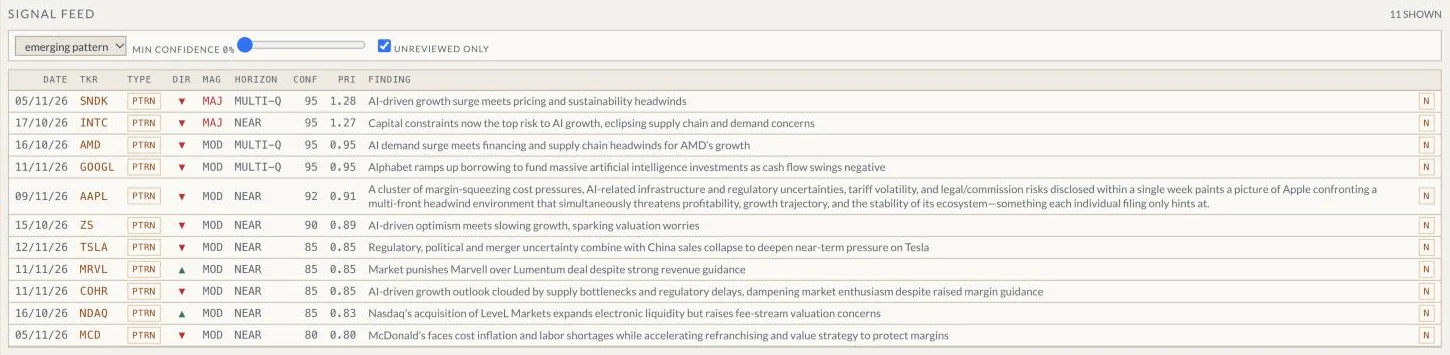
These are four real findings, as Loom's evidence API served them on 16 November 2026.

Loom begins with what changed, before you think to ask.

A new filing, a revised forecast or a cluster of share sales by executives reaches you already read, ranked and sourced.

  1. 1

    Loom starts from what changed in the companies you hold and follow.

  2. 2

    Loom ranks its findings by importance, and each one states what changed and why it may matter.

  3. 3

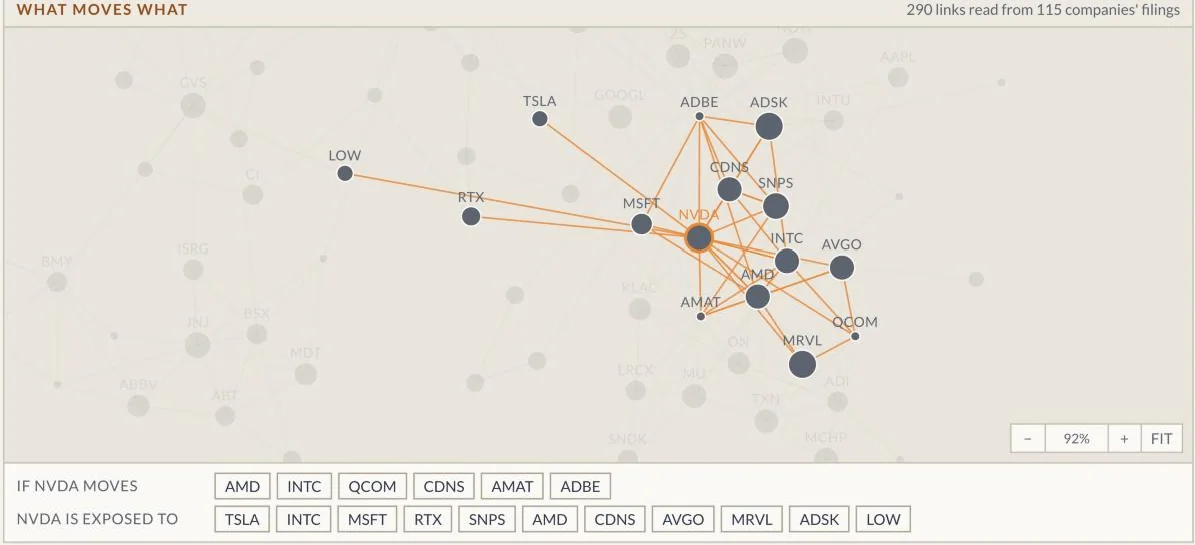
    Loom sets each development against the company's history, its peers and its other sources, and it shows you where they disagree.

  4. 4

    Loom can show you any past date exactly as it was known then.

  5. 5

    The passage and the document behind each finding are one click away.

Loom reports what each document did. The decision stays with you.

Loom never says buy, sell or hold, and it makes no price predictions. When a finding points negative, a document pointed that way: a risk appeared, a forecast was cut, or executives sold together.

Loom already collects the filings of more than 6,000 companies.

These figures come from Loom's production instance on 12 November 2026. Loom has written findings for 1,106 of its companies so far, and reading the rest in full depends on model capacity that the alpha's budget does not yet cover.

6,065companies on the NYSE and Nasdaq are tracked by Loom.

113,831documents have been collected so far.

99,284of those documents are SEC filings.

73,355findings have been written, each with its source.

1,106companies already have findings.

1,223automated tests guard the code base.

You can start with a company you already own.

You add it to your portfolio with what you paid and when. Loom puts what changed in it at the top of every page, and it emails you when something new is filed.